
Teach Outside the Box is an educational site that includes blogs, a shopping site, classroom tips, and more for all educators. One thing I love about this site is the emphasis on STEM and Makerspaces through blogs. Teach Outside the Box’s Makerspace Blog has a handful of blog posts specifically dedicated to all things Makerspace.
One blog post that stood out to me was Top 10 Read Alouds for Elementary Makerspaces as this did not register as something that could be involved with Makerspaces to me, since, after all, a Makerspace is a space where you, well, “make”. Britton (2012) states, “the biggest limitation is simply the lack of knowledge that this is even possible,” (para. 12). I was reminded of this statement as I thought about how read alouds did not stand out to me as being a part of a Makerspace. Therefore I had to investigate to see what this was really all about and if it was even relevant. Upon exploring, I determined relevant read alouds can actually be immensely helpful and quite foundational for Makerspace activities, especially in an elementary school-which naturally made me extremely happy. As future school librarians, we have to be open to finding and willing to accept seemingly unorthodox possibilities that could work for our students in their Makerspace environment. This is especially true for school libraries that may not have certain luxuries such as funding, space, tools or supplies, support from staff or administration, etc.
The author of the blog, Brooke Brown, shares themes to look for in books that relate well with Makerspace activities:
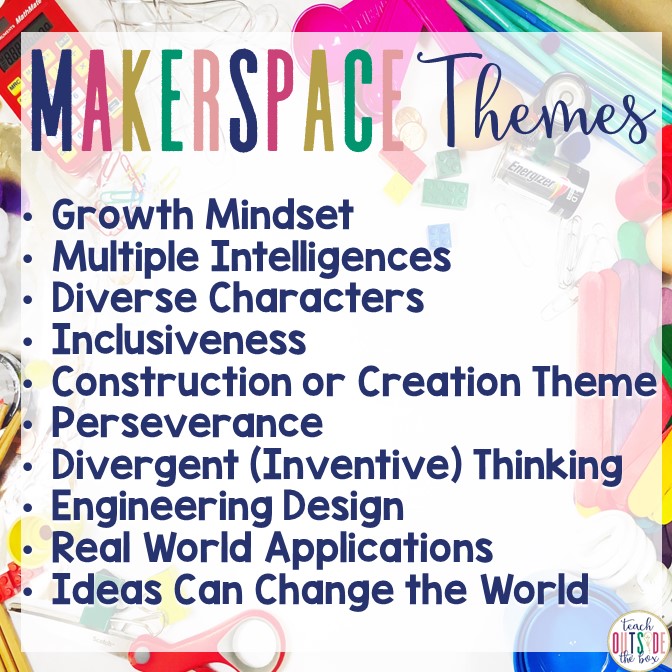
Brown goes on with a list of her “Top Ten Read Alouds for Elementary Makerspaces” which includes a summary of the book, why she loves the book, and maker activities that pair nicely with the book. I love that some of the books seem so ordinary, but because they have at least one of the Makerspace themes listed above, they can be incorporated into a Makerspace activity within an elementary school library.
These read alouds along with their paired makerspace activities are honestly perfect to introduce even the smallest of hands to the world of making! Brown’s blog post parallels with Angevine and Weisgrau’s (2015) three core values of agency, authenticity, and audience. With these values and through Brown’s activities, elementary students have an intimate, hands-on learning that is unique to their own experiences (agency), create meaningful projects or real tools that embodies their experiences with life and their community (authenticity), and contextualize or validate their own place in the world as they create something to share with others (audience). When asking the following questions generated from Angevine and Weisgrau, young students really begin to think about, understand, and devlop the purpose of what they are making:
- What are you making? (agency)
- Why are you making this? (authenticity)
- Who is it for? (audience)
My favorite read aloud and activity that I would like to try first is “Whoosh!” by Chris Barton with the Pom Pom Blaster activity. I am anxious to find more read alouds with these themes and come up with my own Makerspace activities. This blog post has made my teacher heart so, so happy and excited to try something new!
I believe relevantly themed read alouds should be put into use in elementary school libraries because I think, when paired with appropriate Makerspace activities, it can be such a strong foundation for young students, even those in early primary. To be able to connect what they are learning with their imagination, creativity, and making skills is so empowering for young, developing minds. What better way to build this concrete way of thinking for our little minds of the world? Just imagine their thought processes and capabilities as they continue to grow and learn!
Other Makerspace blog posts from Teach Outside the Box:
References
Angevine, C., & Weisgrau, J. (2015, September 24). Situating makerspaces in school. Hybrid Pedagogy. https://hybridpedagogy.org/situating-makerspaces-in-schools/
Britton, L. (2012, October 1). The makings of maker spaces, part 1: Space for creation, not just consumption. The Digital Shift. http://www.thedigitalshift.com/2012/10/public-services/the-makings-of-maker-spaces-part-1-space-for-creation-not-just-consumption/
 All Things: School Libraries